SIPs built Courtyard House progress

The construction of Courtyard House has come on impressively since we were last onsite to visit. In the past three weeks the house build has progressed from just the finished concrete slab, to now having all the external and internal walls in place, and with most of the roof installed.

The house is being built using Structural Insulated Panels (SIPs) a high performing composite building system which can be used as an alternative to traditional building methods. One of the key benefits of using this system is the speed of construction onsite, as they are made offsite to exact measurements, which means the time needed onsite is vastly reduced, on average down by 55% from traditional construction methods.

You can really start to see our initial concept designs starting to take shape on site, check out the comparision photos and you can find more project details here. 

Cedarwood published in Self Builder Magazine

Our Cedarwood project has been featured in the August edition of Self Builder Magazine. 

The article investigates how the property, a timber-framed 1950s bungalow, has been transformed and upgraded, to create a low energy home. The owners, Lettie and Tom had fallen in love with the property and bought it at auction, but didn’t realise just how much work would be involved in bringing it up to modern standards.

To read the full article, click here. 

Groundbreaking on Courtyard House

This month we are celebrating the groundbreaking at the Courtyard House; a new build contemporary home located in Burley, at the heart of the New Forest National Park.

The design of the replacement dwelling offers a greatly improved spatial plan for the tight, elongated site. The scheme enhances the site constraints, by organising the internal spaces around two cut-outs made in the form of courtyards, breaking up the linear nature of the single storey home.

Due to issues around retrofitting the previous property, as it was so poorly constructed and not at all energy efficient, it was decided that it was better way forward to replace the building rather than renovating.
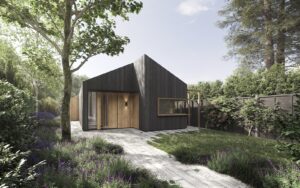
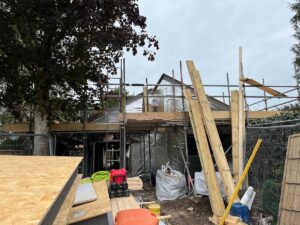
More project details can be found here.

Recency Villa Site Update

This month has seen the construction start in earnest on our Regency Villa project, located in central Southampton, Hampshire. At this early stage, the focus is on carefully stripping back the modern alterations; carefully removing incongruous additions, taking internal stud partitions out, and clearing out the poorly built extension, to reveal the bones of the original period property.

This four-storey listed townhouse, originally built circa 1835, has lost much of its former grandeur over the years, something we are aiming to restore through this deep renovation and reimagining. Most recently, the property had been converted into a House in Multiple Occupation (HMO), which obscured much of the original character and has compromised the proportions of its rooms.

We’re thoroughly enjoying site visits at this point in the project. It’s exciting to see what the talented team at Tuakana is uncovering, such as original floorboards that had been covered over, and concealed, fireplaces. With the modern partitions removed, we can now fully appreciate the true dimensions of each room. Standing in these newly opened spaces and witnessing the natural light interact with the architecture is genuinely inspiring.

Our design vision is to return the house to a single-family dwelling, one that celebrates its period features while introducing a contemporary glass extension to the rear. The result will be a comfortable, elegant home that brings together the history of the home with the comforts of modern living.

Get in touch if you have a project you would like to discuss with the design team.

Planning secured on second phase at St Margarets

Full planning has been secured for the second phase at St Margarets Church, adding a new entrance to the church in Southsea, Portsmouth.

We had previously worked on the church, helping to transform the almost derelict building into a vibrant community hub, this second phase focuses on installing a new entrance porch to help to further reinvigorate the building with the community. Our design adds a contemporary copper clad porch, creating a striking, visual statement that will activate the front of the church with the public realm.

Having worked closely with the church, planners and community over the last few years, we are so pleased to have finally got planning in place for this addition. We look forward to sharing updates of the work as it starts on site later this year.

Get in touch to discover how we can help tranform your community project.

How do I start my self-build project?

Thinking about starting a new project, but not sure where to start?

If you are thinking of starting a self-build project, we understand that it can often feel daunting and you might not quite know where to begin. The team here at Studio BAD have over 50 years’ collective architectural experience designing self-build houses and extensions; we are perfectly placed to help you understand the process a little deeper to ensure you get your project started on the right foot.

Here we sharing some of the most FAQ’s we get from clients at the start of the process, but do get in touch if you have any further questions that we have not covered here.


How do I find a suitable plot of land or property?

If you don’t already have a property that you are looking to transform, then this is a good starting point. This is not always an easy process to find a suitable site, if you haven’t already we would suggest you narrow down your geographical search area and use online databases (for plots of land you can use PlotBrowser). It can also help to get friendly with local estate agents, to help you find that perfect site that can be transformed to perfectly suit you.

Ideally don’t buy any land before you have planning approval in place. Once you have found a potential site, this is a good time to speak with an architect or specialist planning consultant. This gives you an opportunity to check for any restrictions which might impinge on your vision, and arrange to a purchase subject to planning approval.

How much will a self build cost?

Before you commit to buying any property or land, and before you engage with architects too deeply, it is wise to put a realistic budget together on what you have to deliver your project. A very rough guide for a standard domestic construction can cost anywhere between £2,500 and £5,000 + per square meter, depending on the work involved, the level of the finish, complication of the scheme and the quality of the finished fixtures.

Do remember to keep around 15 – 20% in the budget for contingency. This is essential for any unexpected issues, even with the most well experienced team there will be some surprises along the way, especially when working with an existing property.


How do I design a house?

Once you have your site and budget sorted, it is now time to think properly about what you want to achieve. Obviously, it is good to understand the practical needs of the property, such as number of bedrooms, bathrooms and if you need any space to work from.

We would also suggest you think about how you want to live, and how this might adapt over time. For example, do you like open plan kitchens that form a social hub of the house, or do you prefer keeping the kitchen mess out of sight from the rest of the home? If you have children, it is worth planning for their evolving needs; a home suitable for living with a toddler is very different to living with a teenager. A good design should build in flexibility, so the property can support your needs easily as they change over time.

The better idea you have of what you want to achieve, the easier the design process will be. If you are not sure exactly what you want the end result to be, we would strongly suggest you take some time to consider this properly, as otherwise it can create a long and costly design process to get to a point you are comfortable with.

Do I need to work with an architect?

Although you don’t technically need to work with an architect, we strongly advise that you do for most projects. If the scheme is quite simple to explain and doesn’t need high degree of design work, then you might be able to work directly with a skilled contractor and get results you are happy with.

If your vision is more complex, either looking to design a new home or reimagine an existing property, the years of training an architect undertakes can ensure we can get the most from the design, increasing the value of the property in terms of personal value and monetary value. An architect can unlock the potential of a property, or site, to create a home that perfectly fits your needs and maximises the potential of its setting.

When looking for an architect we believe it is important to look for a team who have relevant experience to your project. For example, if you are looking to add a basement extension or are working on a listed heritage building (read more about working on listed building here), it is best if you can work with a team who already have completed experience of these complex projects.

As designing your dream home can be an emotional project, it is important that you actually like and enjoy working with your architect! We would always advise you to work with someone who’s design work you admire, but also that you want to spend the next 6 / 12 months talking to.


What other benefits are there of working with an architect?  

Architects don’t just help create a beautifully designed homes and buildings, there is so much more that they can do to support your self-build project to make the process easier at each step.

During the planning process an experienced architectural team can help guide you, this is especially important if there should be any issues or objections to the application. The designs might need to be revised, or the application might be taken to planning appeal and then the architectural team will be able to systematically approach this to help achieve a positive outcome.

Architects’ co-ordinate other professionals needed on your project, such as the structural engineers, party wall surveyors and building control, ensuring all aspects of design are brought together and the design meets with building regulations and local restrictions.

At the tender process your architect can help you to reviewing contractor quotes, to check all aspects of the build are included as you might expect, to help you understand which option might be the best fit for you and your project.

Throughout the onsite construction stages having an architect involved can be hugely beneficial. By closely collaborating with your contractor, they can check the build is progressing in line with the design, to make sure the finished product turns out just as you imagined it. Additionally, they can be help to deal with any unexpected changes which often happen during a build, helping to quickly resolve design complications or material changes, so the end design is still in line with the concept designs.


If you are looking to start a self build project get in touch to see how we can help, at Studio BAD we are a talented team that are as excited in your project as you are.