In this month’s update we have put together some frequently asked questions to help explain the SIPs build system following the onsite success at our Courtyard House project, we are celebrating our shortlist in the Build It Awards, and have an update from The Granary.
We often get asked questions from our clients about SIP’s as a potential method for building. To help you get a better idea about the benefits of this system, we have answered a few of the most frequently asked questions; including what are the benefits, what are the disadvantages, and is the system cheaper to build with.
Our Brockenhurst House has been shortlisted in this year’s Build It Awards, in the ‘Best Architect or Designer for a Conservation or Renovation Project’. The annual industry awards that celebrate the most inspiring architectural projects and inventive products in the self-build sector, judged by industry leaders.
Brockenhurst House exemplifies how thoughtful, design-led architecture can elevate everyday living. What began as a tired 1970s chalet-style property has been transformed into a refined, low-carbon contemporary home, designed to support its owners’ evolving needs while treading lightly on the planet.
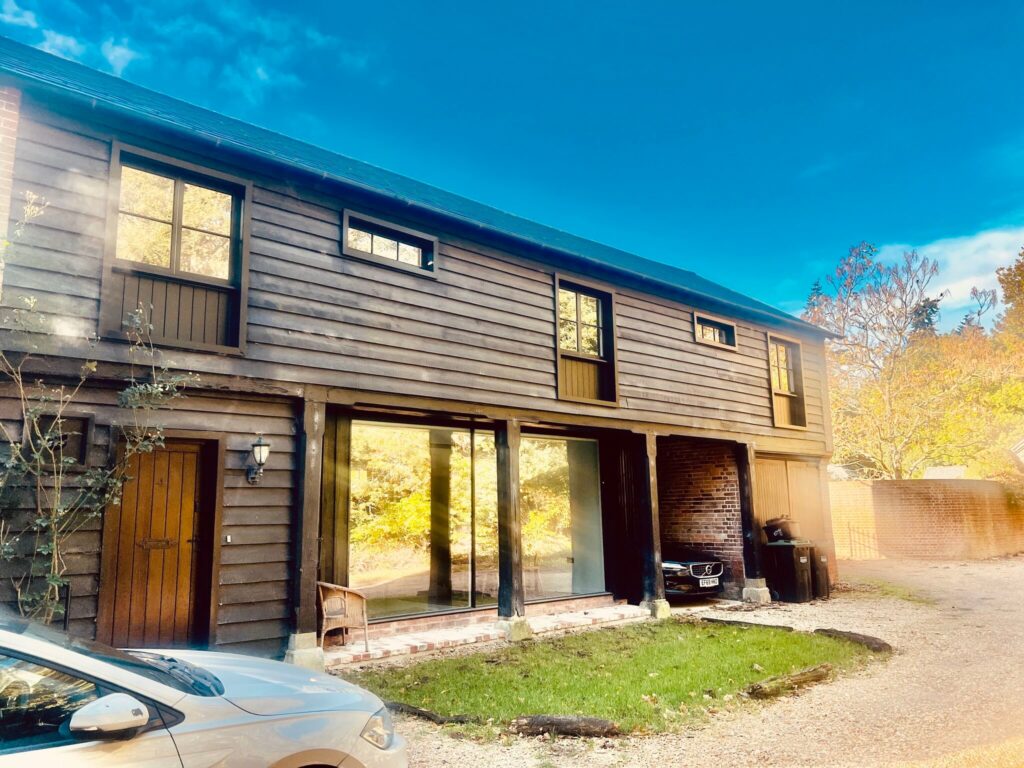
It was great to see such positive progress on site at The Granary, our heritage project in the New Forest National Park set within the curtilage of a listed building.
The project has thoughtfully designed a scheme which converts and infills an existing open carport space on the ground floor aspect of the building, providing an additional bedroom on the first floor and extending the living accommodation on the ground floor.
It was great to see such positive progress at The Granary, our heritage project in the New Forest National Park. The project is so close to completion, we cannot wait to share some professional photos with you soon.
The project has thoughtfully designed a scheme which converts and infills an existing open carport space on the ground floor aspect of the building, providing an additional bedroom on the first floor and extending the living accommodation on the ground floor.
Although The Granary is not a listed building independently, it sits within a curtilage of a listed building, and is of heritage interest due to it being well-preserved example of common agricultural architecture from the period. Due to this this unique heritage of the building, we approached the design sensitively, in order to retain the character of the ancillary buildings, both in terms of individual value and the setting of the listed building.
We often get asked questions from our clients about SIP’s as a potential method for building. To help you get a better idea about the benefits of this system, we have answered a few of the most frequently asked questions.
What are SIPs?
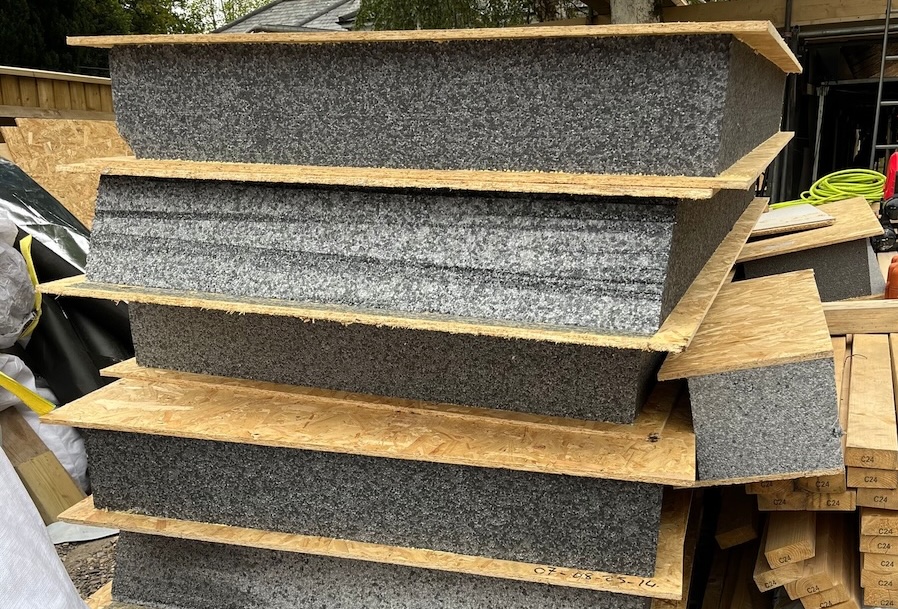
SIPs is the abbreviation for Structural Insulated Panels, a high performing composite building system which can be used on residential and light commercial construction as an alternative to traditional building methods, such as brick and block or timber frame. The panels consist of an insulated foam core, positioned between two timber boards, joined together with timber splines. Creating a pre-fabricated construction system for walls, roofs, and floors.
We are currently using them onsite at our Courtyard House project, in the New Forest National Park, we are utilising this construction method for several reasons. The first was our desire to build a lightweight, low energy, sustainable home, which we could deliver with this building method. The second was due to the logistics around the site, because is it small and constrained we were able to greatly reduce the need for storage onsite, as building with SIPs means it is prefabricated and 50% of the construction happens off-site.
What are the benefits to building with them?
A key benefit when building with this system is the speed of construction onsite, as they are factory made to exact measurements, the construction time needed onsite is vastly reduced, on average down by 55% from traditional construction methods. This time reduction can have a really significant impact in lowering the budget for the construction aspect of a project.
Another benefit of using this system is the high-performance credentials, with inherent airtightness and a ridged insulation core to help reduce air leakage within a building. Additionally, due to the boards being factory produced they can be used with a larger vertical stud wall spacing (traditionally the spacing is at 600mm centres, but can be at 1200mm centres with SIPs) reducing the cold-bridging in the construction.
What are the disadvantages of using them?
Due to the system being factory built, there is a lot of pre-construction work and co-ordination needed between SIP manufacturer and Architect. As once onsite it is difficult to make last minute changes as you might using traditional methods, this needs to be taken into consideration from the start of the detailed design.
When designing a building using this method of construction, the ventilation needs to be carefully planned, as due to the airtight qualities of using SIPs method without adequate ventilated there is a risk of condensation build up, and the internal air becoming stale.
Additionally, as the construction process is specialist, there might be less choice of suitable and experienced contractors available when looking to complete the work for you. Look out for SIP companies who supply and install to get a full package.
Can I use for an extension, or whole house?
It is a versatile system which is suitable for all residential and small commercial projects, both to create whole new builds, or to be used as an extension on a traditionally built property.
Are SIPs cheaper to build with?
The cost depends greatly on the project, but usually it is not a cheaper way to build. It is good to understand that although the initial outlay in the cost of materials when using SIPs is more expensive, there are significant savings to be made in terms of time needed on site construction, compared to traditional building methods. For our Courtyard House Project the cost was very comparable to traditional timber frame, however the savings came in the time and labour, and therefore worked out more cost effective overall.
Are there any projects that SIPs are not suitable?
SIPs are a timber-based building system and so are not good to use in moist conditions, so the system is not suitable for projects like basements or sites within flood zones. In these instances, it would be better to use a traditional system at least on the lower floors, you could always introduce SIPs panels on upper levels of a building.
You will also need good access to your site, to ensure the panels can be delivered and the right plant machinery can get to the site in order to manoeuvre the panels around. This need not always be a barrier though, as for our tricky site in the New Forest we had a good understanding with the SIP supplier and deliveries were made in smaller loads and lifted by hand or used small winches. As it is a lightweight construction method, it is not always necessary to need cranes for construction.
Like all building methods it is about understanding what is the best possible method for the site, design, budget, performance goals, and the day to day running on site.
Get in touch if you would like to discuss how we can help you with a SIPs built home.
Our Brockenhurst House has been shortlisted in this years Build It Awards, in the ‘Best Architect or Designer for an Extension Project’. The annual industry awards that celebrates the most inspiring architectural projects and inventive products in the self-build sector, judged by industry leaders.
Brockenhurst House exemplifies how thoughtful, design-led architecture can elevate everyday living. What began as a tired 1970s chalet-style property has been transformed into a refined, low-carbon contemporary home, designed to support its owners’ evolving needs while treading lightly on the planet.
We look forward to the winners being revealed later this year.
As autumn begins, we’ve seen exciting progress across several projects. There have been dramatic changes on site in the New Forest, we’ve once again supported the Homebuilding & Renovating Awards, and our Allegra’s Ambition public art commission has now been installed in Winchester.
To get our news directly to your inbox you can sign up to our mailing list here.
Courtyard House, SIPs Structure
It was fantastic to see the significant progress at Courtyard House during our recent site visit. This exciting project is delivering a striking contemporary home near Burley, in the heart of the New Forest National Park.
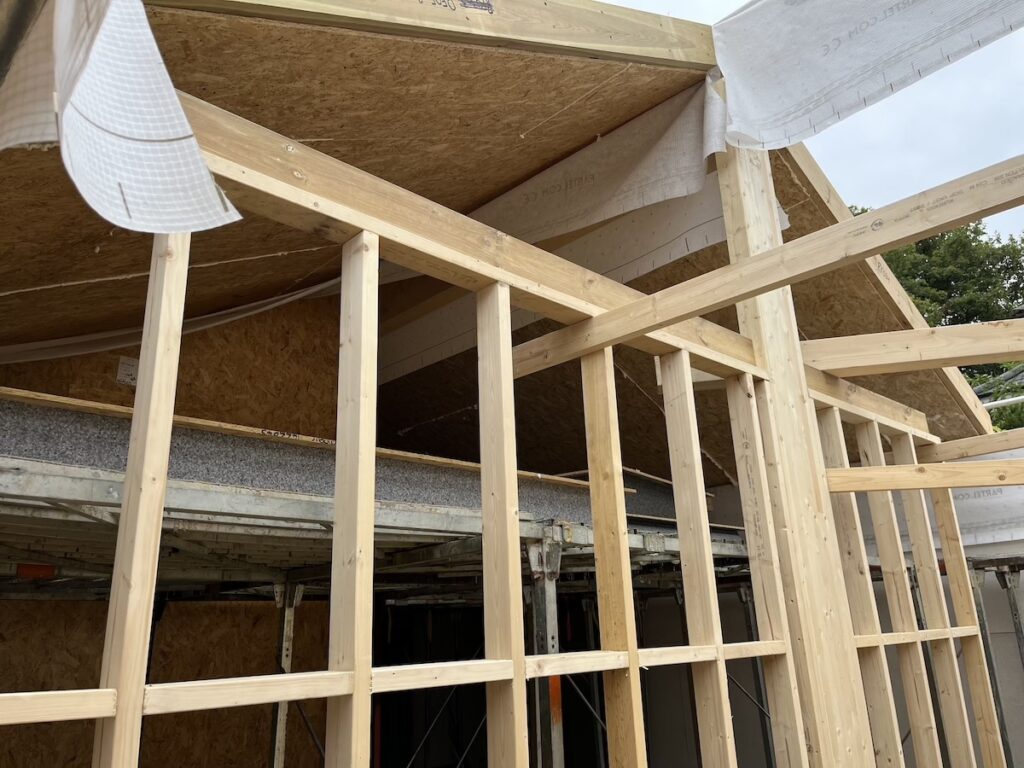
The property is being constructed using Structural Insulated Panels (SIPs), a high-performance composite building system that offers a modern alternative to traditional construction methods. Fabricated off-site, these panels greatly reduce on-site construction time. For this project, it has meant that all walls and the majority of the roofing structure has been erected in under a month!
Judging Industry Awards
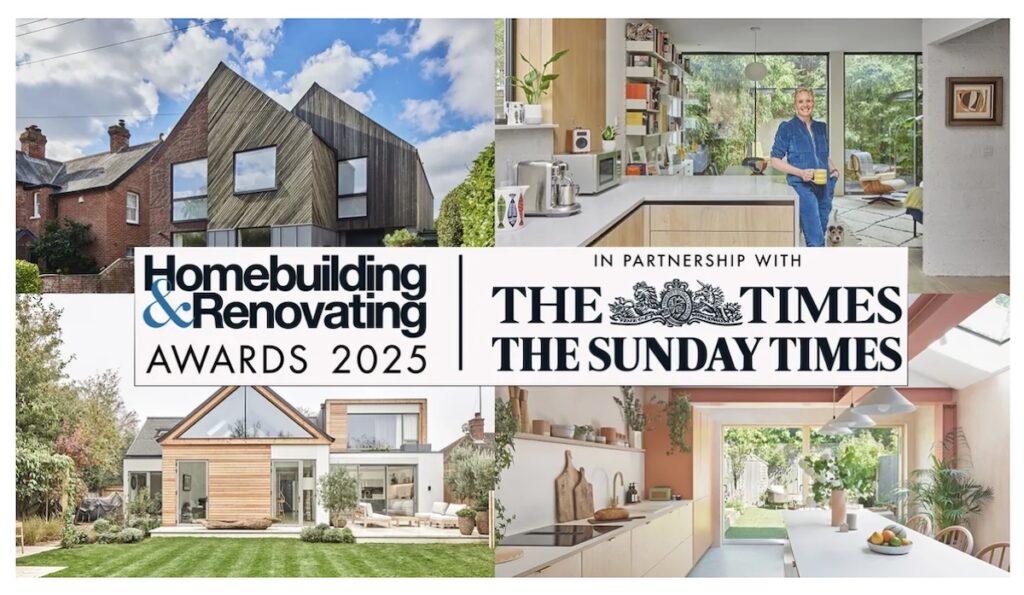
Darren was once again invited to join the judging panel for the prestigious Homebuilding & Renovating Awards, held in partnership with The Times and The Sunday Times.
The panel of eight expert judges had the enjoyable, but challenging, task of reviewing all the entries and narrowing them down to a shortlist of just 25 outstanding properties. From this shortlist, the panel will now work together to select the winners for each category.
Have your say! You can also get involved by voting for your favourite project in the Readers’ Choice Award – just click here to vote.
Allegras Ambition Public Artwork Installed
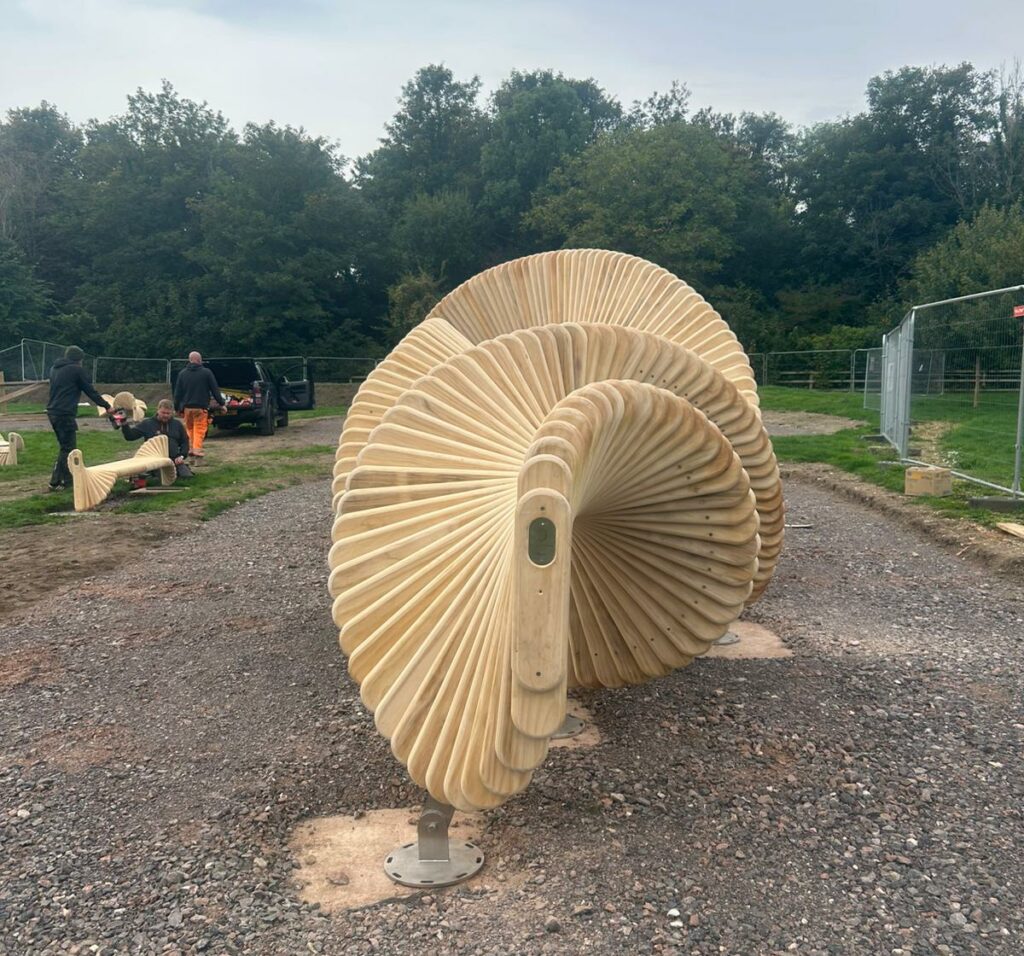
We’re very proud to see the public art we designed for Allegras Ambition now installed outside Winchester Sports Centre.
Our team won the public art competition last year with a well concieved design that incorporates the charity’s logo into a beautifully tactile wooden seat sculpture. The shape of the structure forms a welcoming enclosure, inviting people to gather, sit, lounge, or even climb and crawl across its undulating surface.
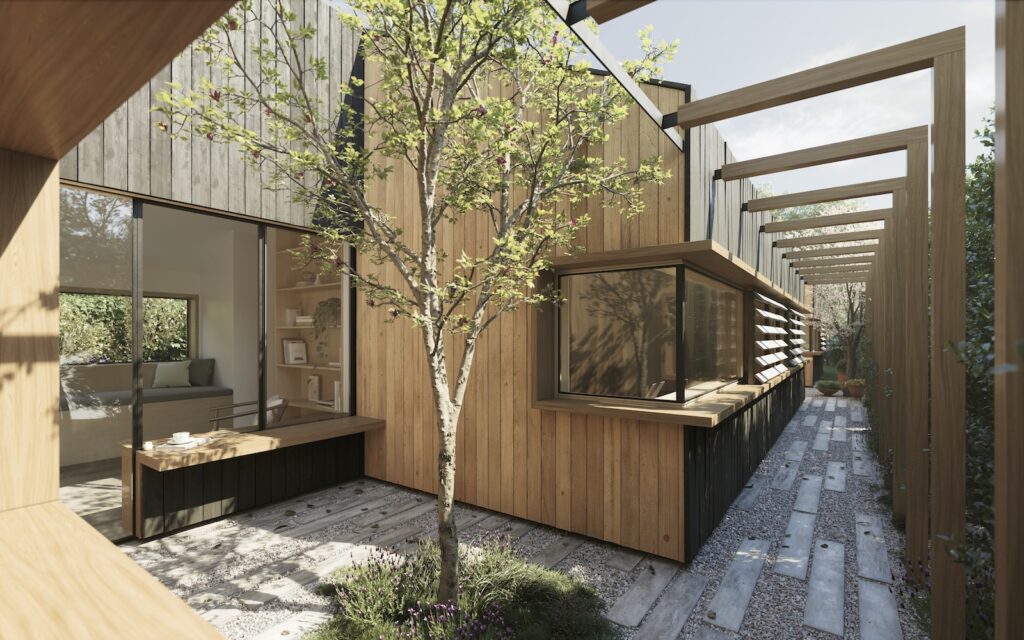
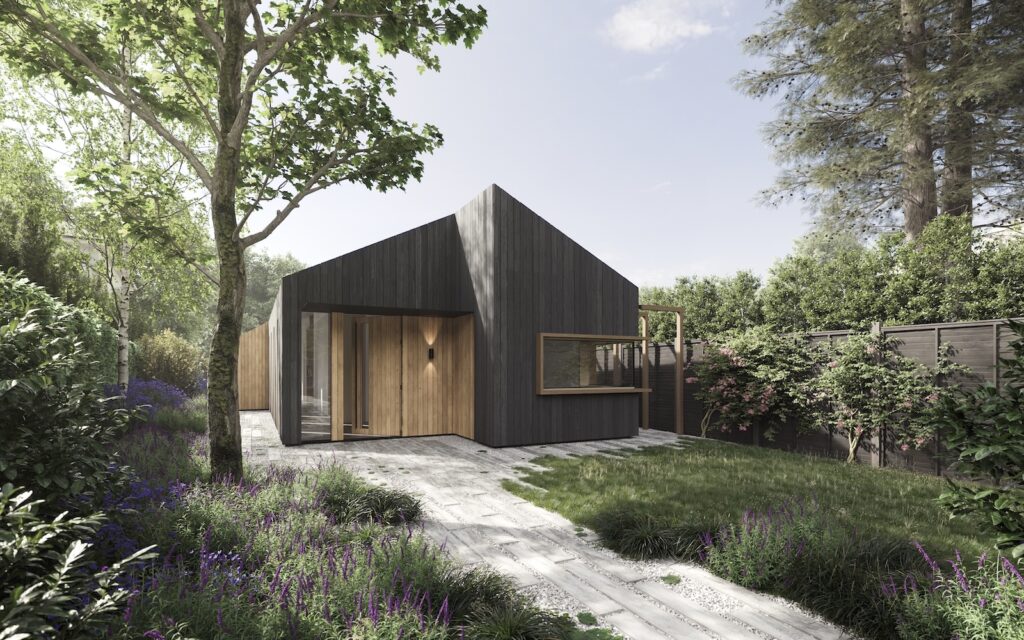
The construction of Courtyard House has come on impressively since we were last onsite to visit. In the past three weeks the house build has progressed from just the finished concrete slab, to now having all the external and internal walls in place, and with most of the roof installed.
The house is being built using Structural Insulated Panels (SIPs) a high performing composite building system which can be used as an alternative to traditional building methods. One of the key benefits of using this system is the speed of construction onsite, as they are made offsite to exact measurements, which means the time needed onsite is vastly reduced, on average down by 55% from traditional construction methods.
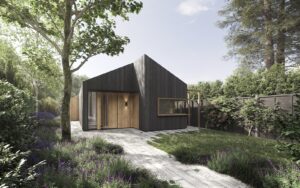
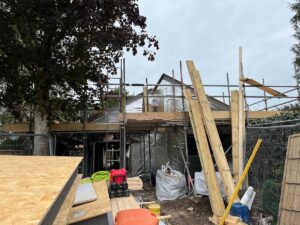
You can really start to see our initial concept designs starting to take shape on site, check out the comparision photos and you can find more project details here.