March Practice News

In this month’s update, we are sharing news of sustainable EV charging at Marwell Zoo, update on the Brick Pavilion project in Chichester, and another award win for our Brockenhurst House.

New Forest Design Award Win

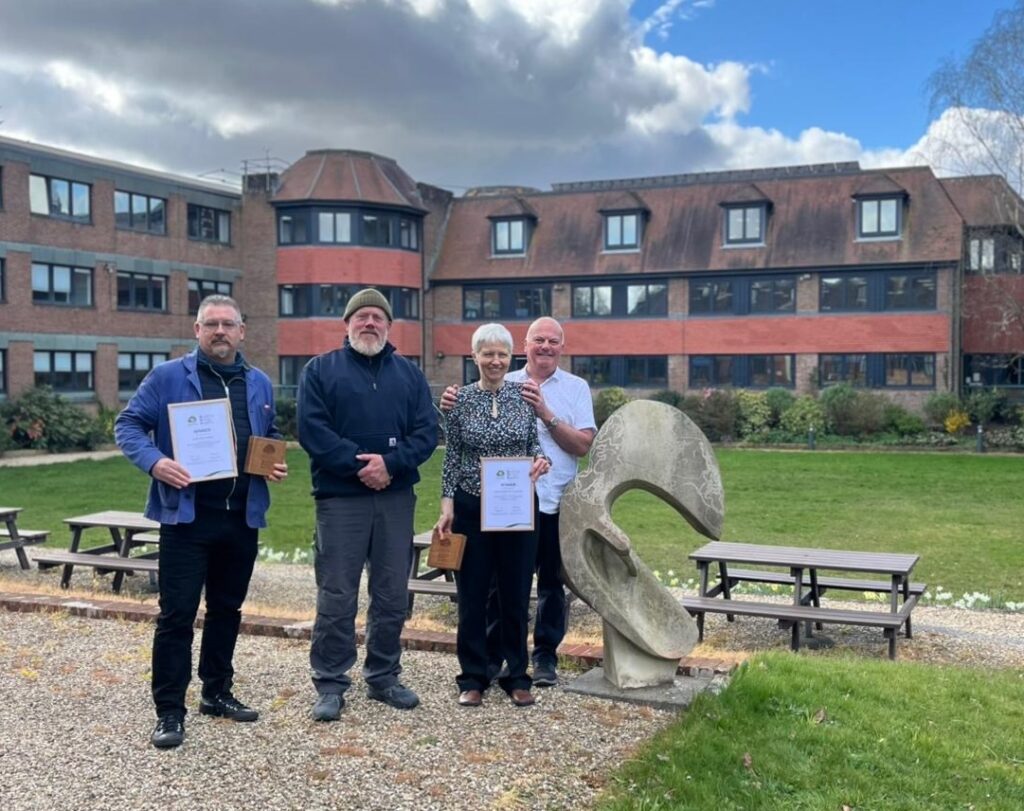
We are honoured to have had our Brockenhurst House awarded with Best Residential Project in this years New Forest Design Award, the second award for this project so far!

These awards are organised by the New Forest District Council, set up to recognise high quality design and the best new developments within the New Forest National Park.

The judges commented, ‘this design was a noteworthy combination of modern, forward-thinking ideas, which referenced the local vernacular in materials, and employed good green credentials. They were particularly pleased to see a proposal more in spirit of the government’s advice over embodied carbon, with retention over replacement, and showcasing a retrofit scheme on a more typical modern dwelling found within the New Forest.’

Chichester Brick Pavilion update

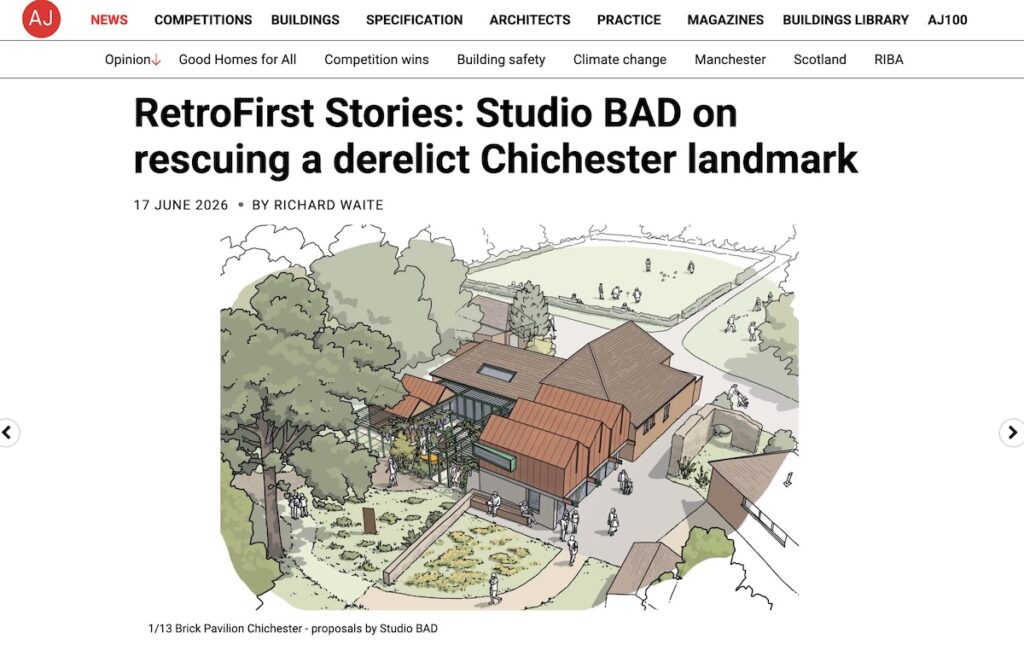
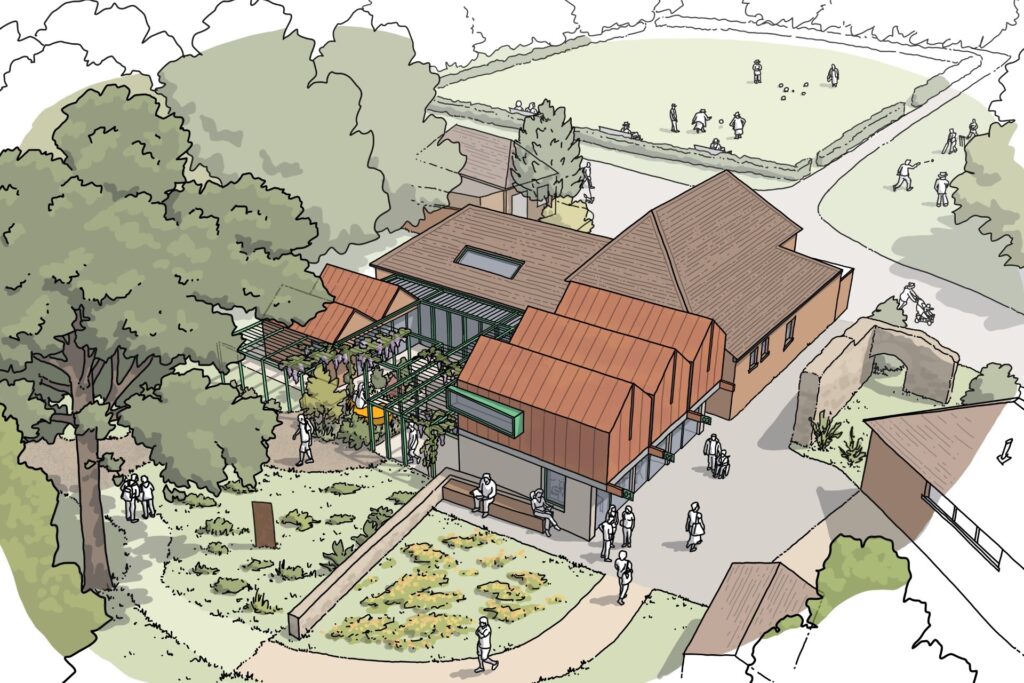
We have submitted planning for our Brick Pavilion project, an exciting milestone in this community project. Our design reimagines and redevelops the vacant, locally significant building situated in the north-west corner of the cities Priory Park.

We have been working in collaboration with Chichester Community Development Trust (CDT). To help steer the designs we have hosted communitte engagment events, to explore how this neglected building can be restored, using design to deliver a valuable community asset.

Sustainable EV Charging at Marwell

We have achieved planning permission for a unique, fully off grid electrical vehicle charging system at Marwell Zoo, working in collaboration with the University of Southampton and the FEVER research project.

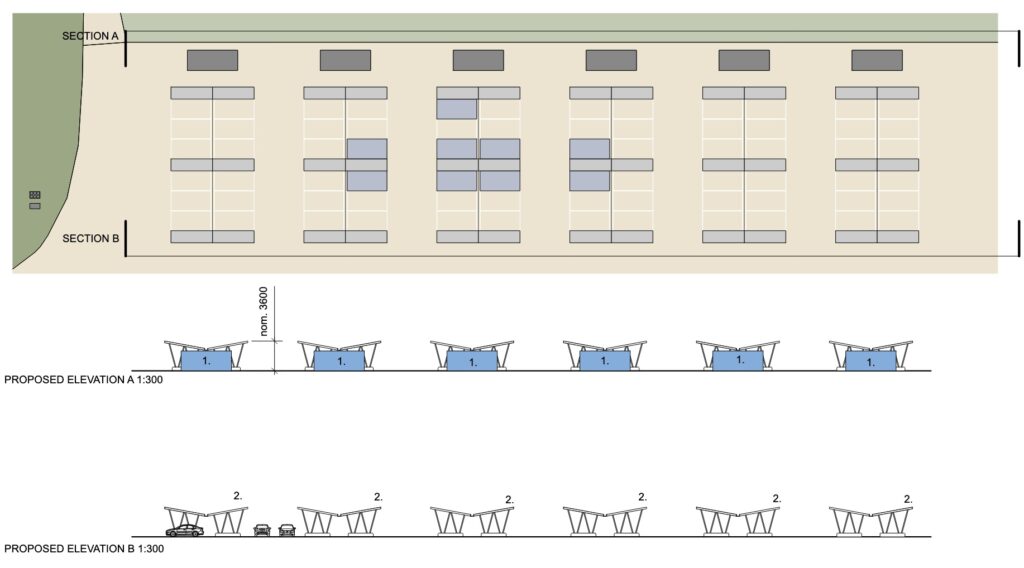
The project delivers over 20 EV charging spaces, designed with solar panels installed on butterfly roofs, which are linked to battery storage and a back up generator.

The design offers visitors an opportunity to charge their cars sustainably, aligning with the zoo’s strong commitment in this area. Learn more here. 

Planning success for sustainable charging at Marwell

Studio BAD have worked in collaboration with University of Southampton to research, and achieved planning permission for fully off-grid electric charging within the Marwell Zoo customer car park, near Winchester in Hampshire.

Designed to deliver sustainable infrastructure to support the nationwide drive towards sustainable car charging, without adding a burden to the existing electrical grid, this project is a trail which we hope can be rolled out to more locations in the near future. This scheme is set to be live for three years, to test the unique, fully off grid electrical vehicle charging technology. Because of the temporary nature of the installation, the design does not involve the removal or alternation of any of the mature trees on the site, installing permanent foundations, or fixing, it has been designed to touch the ground lightly, and be removable.

In total the project will deliver over 20 car charging space, with solar panels installed on butterfly roofs, linked to battery storage, and a back up generator.

The design offering visitors to the zoo an opportunity to charge their cars sustainably. Supporting and aligning to the zoo’s strong commitment in this area, other initiatives include generating their own power through solar power, and their ‘Zoo Poo’ project which recycles animal waste to heat buildings.

The project works in collaboration with the FEVER research project, led by the University of Southampton in partnership with Universities of Sheffield, Surrey, and Portsmouth, and funded by the UK Engineering and Physical Sciences Research Council (EPSRC).

New Forest Building Design Award Win

We are so happy to have had our Brockenhurst House recognised in the New Forest Building Design Awards this year, picking up the award for Best Residential Project – our second award for this project to date!

Our project has reimagined the distinctive 1970s chalet-style home set on the edge of Brockenhurst village. Our design was guided by three key ambitions: improving spatial flexibility, enhancing environmental performance, and strengthening the connection between house and garden. The finished project has created a contemporary, sustainable, and accessible home, without compromising the architectural quality of the spaces.

The judges commented that the project had a ‘noteworthy combination of modern, forward-thinking ideas, which referenced the local vernacular in materials, and employed good green credentials.’

They went on to praise the project, which they felt was ‘in spirit of the government’s advice over embodied carbon, with retention over replacement, and showcasing a retrofit scheme on a more typical modern dwelling found within the New Forest’.

This would not have been possible without our wonderful and inspiring clients, and our hardworking team of collaborators who brough this scheme to life – congratulations to us all.

Courtyard House, January Project Update

We visited the Courtyard House site last week, located in the New Forest near the village of Burley, and were delighted to see that the building is now ‘watertight’; an important milestone in the construction process.

With the glazing fully installed and the roof now tiled, the project is now completely enclosed and protected from the elements. This marks a key transition on site, allowing the construction team to move their focus to the internal works, including plumbing, electrics, and finishes. From this stage on, the scheme will begins to feel more like a home and less like a building site.

Internally, the house feels spacious and filled with natural light, something we have worked incredibly hard to achieve on this narrow site. The internal courtyards, carefully cut into the building form, respond to the constraints of the elongated plot by drawing daylight deep into the plan and strengthening the connection between inside and out.

We look forward to sharing further updates as this New Forest residential project continues to take shape.

Best Architect Award

We are absolutely thrilled to have won the ‘Best Architect for an Extension Project’ at this year’s Build It Awards for our Brockenhurst House project.

The design has taken the tired 1970’s chalet home, and transformed it into a stunning, contemporary home to perfectly suit our clients’ needs. Their ambition was to extend and reimagine the property to deliver a home that could support their evolving needs, while remaining true to principles of beauty, sustainability, and architectural integrity.

The result is a refined, low energy home that champions passive solar design, natural materials, and renewable technologies, demonstrating how thoughtful architecture can elevate everyday living while responding to environmental challenges.

Our client stated;

From our very first meeting with Darren and Studio BAD team, it was clear that we had found someone who was listening and importantly hearing our ideas, priorities, and intentions. As we are of a mature age and this is to be our forever home. A warm and comfortable, accessible, and environmentally responsible property was our goal and with Studio BAD’s design and assistance we have been able to score it.
‘We are delighted with our completed home and are able to enjoy life without worrying about changing situations regarding aging, mobility and access etc.’


You can find full project details here. 

SIPs Q&A

We often get asked questions from our clients about SIP’s as a potential method for building. To help you get a better idea about the benefits of this system, we have answered a few of the most frequently asked questions.

What are SIPs?

SIPs is the abbreviation for Structural Insulated Panels, a high performing composite building system which can be used on residential and light commercial construction as an alternative to traditional building methods, such as brick and block or timber frame. The panels consist of an insulated foam core, positioned between two timber boards, joined together with timber splines. Creating a pre-fabricated construction system for walls, roofs, and floors.

We are currently using them onsite at our Courtyard House project, in the New Forest National Park, we are utilising this construction method for several reasons. The first was our desire to build a lightweight, low energy, sustainable home, which we could deliver with this building method. The second was due to the logistics around the site, because is it small and constrained we were able to greatly reduce the need for storage onsite, as building with SIPs means it is prefabricated and 50% of the construction happens off-site.

What are the benefits to building with them?

A key benefit when building with this system is the speed of construction onsite, as they are factory made to exact measurements, the construction time needed onsite is vastly reduced, on average down by 55% from traditional construction methods. This time reduction can have a really significant impact in lowering the budget for the construction aspect of a project.

Another benefit of using this system is the high-performance credentials, with inherent airtightness and a ridged insulation core to help reduce air leakage within a building. Additionally, due to the boards being factory produced they can be used with a larger vertical stud wall spacing (traditionally the spacing is at 600mm centres, but can be at 1200mm centres with SIPs) reducing the cold-bridging in the construction.

What are the disadvantages of using them?

Due to the system being factory built, there is a lot of pre-construction work and co-ordination needed between SIP manufacturer and Architect. As once onsite it is difficult to make last minute changes as you might using traditional methods, this needs to be taken into consideration from the start of the detailed design.

When designing a building using this method of construction, the ventilation needs to be carefully planned, as due to the airtight qualities of using SIPs method without adequate ventilated there is a risk of condensation build up, and the internal air becoming stale.

Additionally, as the construction process is specialist, there might be less choice of suitable and experienced contractors available when looking to complete the work for you. Look out for SIP companies who supply and install to get a full package.

Can I use for an extension, or whole house?

It is a versatile system which is suitable for all residential and small commercial projects, both to create whole new builds, or to be used as an extension on a traditionally built property.

Are SIPs cheaper to build with?

The cost depends greatly on the project, but usually it is not a cheaper way to build. It is good to understand that although the initial outlay in the cost of materials when using SIPs is more expensive, there are significant savings to be made in terms of time needed on site construction, compared to traditional building methods. For our Courtyard House Project the cost was very comparable to traditional timber frame, however the savings came in the time and labour, and therefore worked out more cost effective overall.

Are there any projects that SIPs are not suitable?

SIPs are a timber-based building system and so are not good to use in moist conditions, so the system is not suitable for projects like basements or sites within flood zones. In these instances, it would be better to use a traditional system at least on the lower floors, you could always introduce SIPs panels on upper levels of a building. 

You will also need good access to your site, to ensure the panels can be delivered and the right plant machinery can get to the site in order to manoeuvre the panels around. This need not always be a barrier though, as for our tricky site in the New Forest we had a good understanding with the SIP supplier and deliveries were made in smaller loads and lifted by hand or used small winches. As it is a lightweight construction method, it is not always necessary to need cranes for construction.

Like all building methods it is about understanding what is the best possible method for the site, design, budget, performance goals, and the day to day running on site.


Get in touch if you would like to discuss how we can help you with a SIPs built home.